AI-generated illustration — not a retailer product photo.
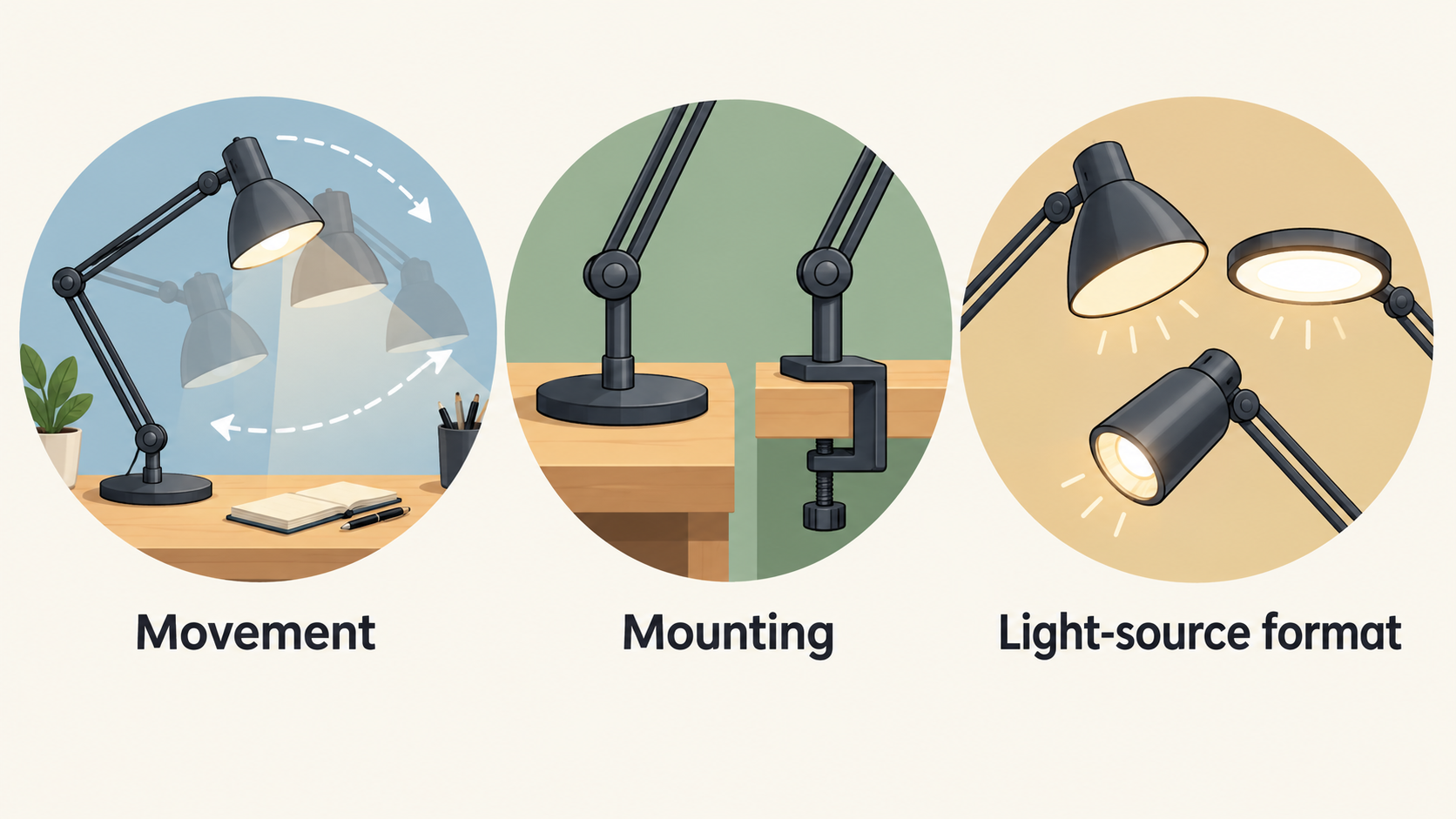
An adjustable task lamp is most useful when its movement, mounting and light-source format match the surface it needs to serve. This guide compares documented approaches for home offices, studios and light workshops, helping you narrow the choice without assuming that one lamp suits every desk.
Verdict for Adjustable Desk and Task Lamps
AI-generated illustration — not a retailer product photo.
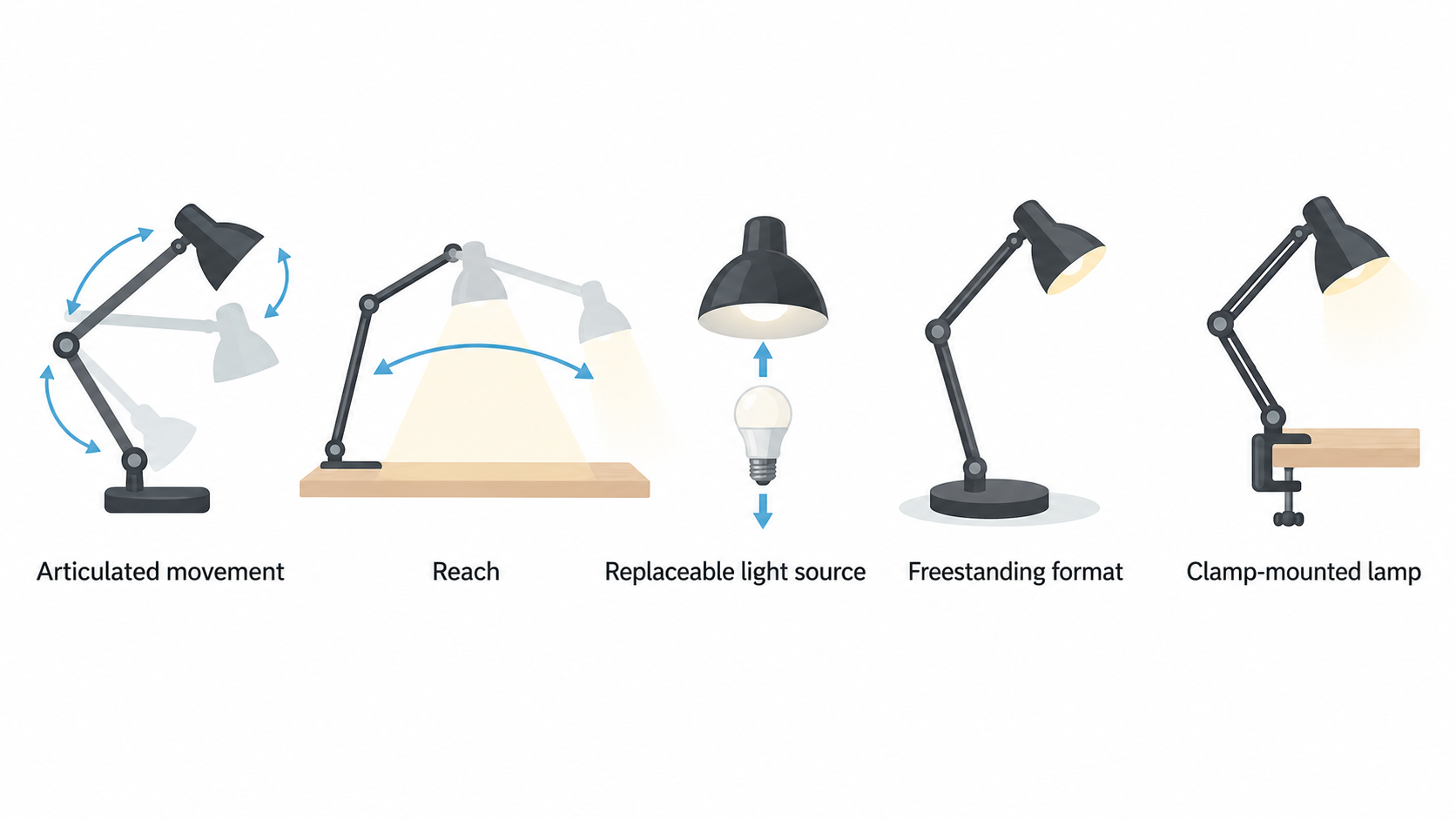
For a conventional desk, a balanced-arm lamp is the strongest starting point when you need to move the shade across a defined area without repositioning the whole base. Anglepoise’s Type 75 is a clear example: its published specification combines articulated movement with a 26-inch maximum reach, a cast-iron base and an included E26 bulb. That makes it a sensible comparison point for buyers who value reach, a replaceable light source and a freestanding format.
A clamp-mounted lamp can be the more practical route where desk space is limited. IKEA’s TERTIAL has an adjustable arm and head, can be used as a table lamp or wall-mounted, and has a stated clamp range of up to 60 mm. Its bulb is sold separately, so the final light output depends partly on the E27 bulb selected.
For a more design-led desk or reading area, Artemide’s Tolomeo Table demonstrates a third approach: aluminium arms, an all-direction adjustable head and a spring mechanism intended to alter height and tilt. The right choice is therefore not an overall winner. Start with the mounting surface, then compare reach, control of the head, bulb or integrated-light design, materials and the likely replacement path.
What Defines a Useful Adjustable Task Lamp
AI-generated illustration — not a retailer product photo.
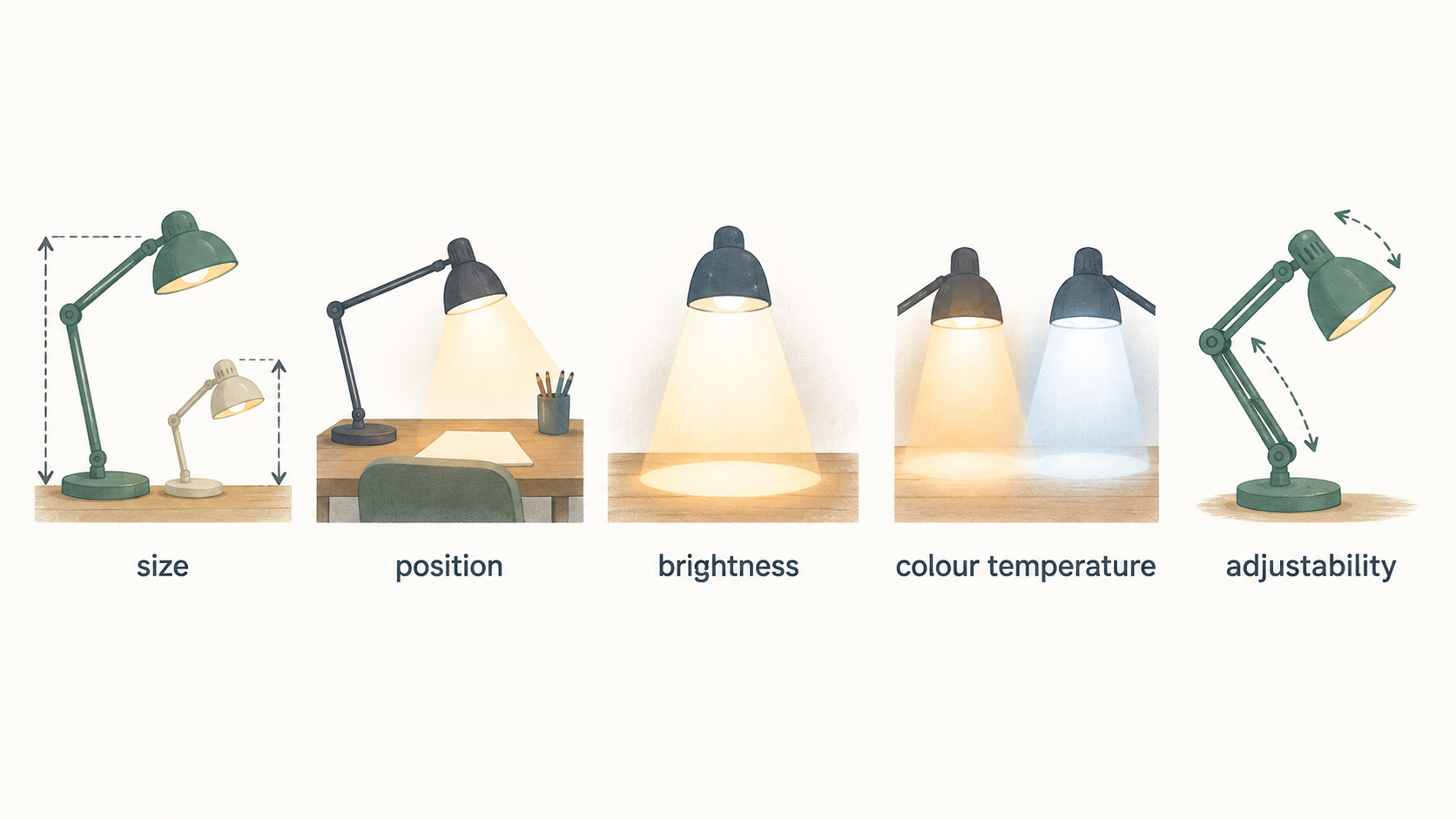
“Adjustable” can describe several different mechanisms. A lamp may have a jointed arm, a spring-balanced arm, a pivoting shade, a flexible neck or several of these together. What matters is whether those movements let you place light over the part of the desk, bench or chair where it is needed. Independent editorial guidance also highlights size, position, brightness, colour temperature and adjustability as relevant desk-light considerations.
Begin by separating the workspace from the lamp format. A freestanding base works where the desk can spare some footprint and where the lamp may need to move between positions. A clamp can free up the surface but introduces a physical compatibility check. A wall-mounted option may suit a fixed reading or work point, provided the intended installation location and cable arrangement work for the room.
Next, distinguish mechanical positioning from light control. The Type 75 places its switch in the shade and specifies an E26 bulb; TERTIAL uses a separately purchased E27 bulb. These details make the lamp body only one part of the decision. With a replaceable-bulb model, compare the lamp’s stated fitting with the bulb options available in your region. With an integrated-light model, examine the current product listing for its controls, service information and replacement route rather than assuming that every LED lamp is maintained in the same way.
Finally, treat materials as practical information rather than a performance verdict. Aluminium, steel and cast iron describe different construction choices, but they do not by themselves establish suitability for a particular task. Use them alongside reach, mounting and the room’s visual priorities.
Strengths of Articulated Arms and Adjustable Heads
AI-generated illustration — not a retailer product photo.
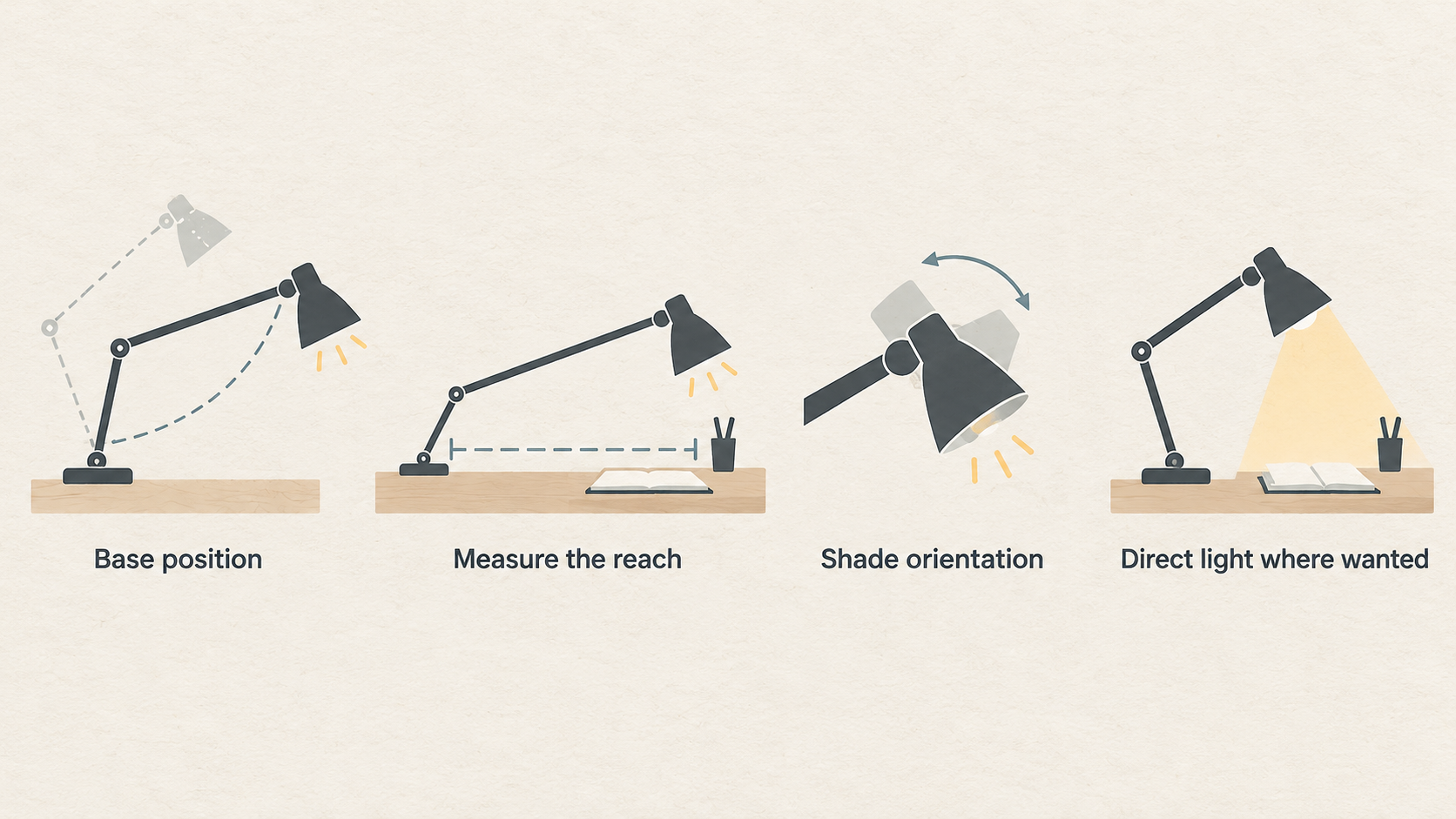
An articulated arm is valuable because it separates the lamp’s base position from the shade position. Anglepoise specifies a maximum 26-inch reach for the Type 75, measured from base to shade. That published dimension gives a buyer a concrete starting point: measure from the proposed base location to the furthest area that needs light, then allow for the shade’s final orientation.
A movable head adds a second layer of control. IKEA states that TERTIAL’s arm and head are adjustable, allowing the user to direct light where wanted. Artemide describes Tolomeo’s head as adjustable in all directions and its spring mechanism as enabling height and tilt adjustment. These mechanisms can be helpful when the task changes between keyboard work, drawing, reading or a work surface, because the light can be repositioned instead of merely switched on from a fixed direction.
The mounting format changes how much of that range is usable. A heavy freestanding base can be moved without modifying the desk, while a clamp fixes the arm’s starting point at the desk edge. TERTIAL’s option to work as a table lamp or be mounted on a wall broadens the placement conversation, but it does not remove the need to check the exact surface and current installation information.
Do not treat the longest stated reach as automatically better. A compact desk may benefit more from a shorter arm with a controllable head, while a broad studio table may need a lamp whose base or clamp can be placed away from the work. Map the documented range onto your own layout before comparing finish or style.
Limitations to Check Before Buying
Clamp compatibility is the first practical constraint. TERTIAL’s published clamping range is up to 60 mm. Measure the actual desk edge rather than relying on a nominal desktop thickness: an apron, cable tray, rounded edge or nearby drawer can reduce the usable clamping area. Where the desk cannot accept a clamp, compare a freestanding or wall-mounted format instead.
Included components are another frequent source of mismatch. The Type 75 listing states that an E26 bulb is included. TERTIAL states that the bulb is sold separately and recommends an E27 globe opal-white LED bulb. That does not make either format universally preferable; it means buyers should check the fitting, what is in the box and the locally available bulb options before ordering.
Moving parts also deserve a realistic expectation. Springs, joints and adjustable shades provide flexibility, but they add elements a buyer should inspect in current product documentation for care, warranty and service terms. Anglepoise’s product page describes its Guaranteed for Life service promise, but the applicable terms and regional availability should be checked on the relevant local listing rather than assumed from another market.
Integrated-light designs require a different comparison. BenQ’s e-Reading desk lamp is presented within a lighting range that includes desk lamps and monitor light bars, but the supplied regional page does not establish a single Germany-specific configuration, price or service arrangement. Use it as a category prompt: confirm the local version, controls, included power equipment and service route directly with the current seller or manufacturer.
Shortlist of Adjustable Task Lamp Approaches
1. Classic balanced-arm, freestanding task lamp
This route suits a desk where the lamp needs to travel across the surface while keeping a stable base. The Anglepoise Type 75 is a documented example, with aluminium arms and shade, chrome-plated fittings, a cast-iron base, an integrated shade switch and a stated 26-inch maximum reach. Its included E26 bulb gives buyers a defined starting configuration. It is a useful shortlist candidate for someone who wants a traditional task-lamp form and prefers to assess a replaceable bulb separately from the arm mechanism.
Before choosing this approach, measure the required reach from the likely base location. Also check current regional stock, bulb compatibility and service terms. The supplied product page is a US listing, so it should not be used to infer German price, delivery or availability.
2. Clamp-mounted steel work lamp
This approach prioritises desk space and a fixed edge position. IKEA’s TERTIAL uses a steel arm and reflector shade, has an adjustable arm and head, and can be used on a table or mounted on a wall. The stated 60 mm maximum clamp range is particularly useful because it turns a vague compatibility question into a measurement.
It is a plausible route for a compact home-office desk, a fixed studio station or a work surface where a base would get in the way. However, the separate E27 bulb means the buyer must choose the bulb as part of the system. Confirm the desk edge, preferred bulb and current local listing before treating it as a final selection.
3. Design-led articulated lamp
Artemide’s Tolomeo Table represents an approach where adjustable mechanics and visual design are both central. The manufacturer describes aluminium construction, a spring-operated articulated arm system and a head adjustable in all directions. That makes it relevant to buyers who want to direct light at a desk or reading position while also considering the lamp as a visible part of the room.
This is not a claim that it will outperform every balanced-arm or clamp lamp. Instead, compare its documented adjustment and current local ownership details against the size of the work area, the desired mounting format and the importance of replaceable components.
Alternatives to Traditional Adjustable Arm Lamps
A traditional arm lamp is not always the most direct solution. If the goal is to light a monitor-centred desk while keeping the surface clear, a monitor light bar may be a better category to investigate. BenQ’s lighting range explicitly includes monitor light bars alongside e-Reading desk lamps, showing that these are distinct formats rather than merely variations of the same arm lamp.
If you need several brightness or colour-temperature settings, look beyond the arm mechanism and assess lamps that document those controls. Independent editorial coverage of desk lamps notes that some models offer multiple colour temperatures, charging features and extending necks. Such features may suit a desk routine, but they still need to be checked in the current regional listing for the exact model.
For a small reading corner, a compact table lamp or a wall-mounted directional light can be more appropriate than an articulated arm extending over a desk. For a large shared workbench, more than one task-light position may be easier to manage than expecting a single lamp to cover every station. Choose the category based on placement first, then compare documented controls and service information.
How to Choose for Your Desk Studio or Workshop
Use a simple selection order.
Map the work area. Mark the desk edge, bench zone or reading position that needs light, then identify where a base, clamp or wall point could realistically sit.
Measure the physical constraint. For a clamp model, measure the available edge and obstructions. For a freestanding model, measure the required reach from base to shade. TERTIAL’s 60 mm clamp range and Type 75’s 26-inch maximum reach are examples of the kind of published figures worth comparing.
Compare the adjustment system. Decide whether you mainly need lateral reach, height and tilt, or fine aiming from the head. A movable shade alone may be enough for a fixed reading spot; a spring-balanced arm may make more sense where the work position changes often.
Check the light-source format. Confirm whether a bulb is included, the stated fitting, or whether the lamp uses an integrated source. Then verify current local availability of compatible replacement parts or service support.
Review materials and ownership terms. Materials help describe the product, while warranty and maintenance information can clarify the ownership path. Keep conclusions conditional on the current Germany or Europe listing.
Ready to turn your measurements into a shortlist?
Frequently Asked Questions
Is a clamp-mounted task lamp suitable for every desk?
No. The desk needs a usable edge that fits the clamp and is free of obstructions. IKEA lists TERTIAL with a clamping range up to 60 mm, so measure the real mounting point, including any lip, frame or cable hardware. If that point is unsuitable, consider a freestanding or wall-mounted format.
Should I choose a lamp with a replaceable bulb or an integrated light source?
Choose according to the ownership path you prefer, not a blanket rule. The Type 75 includes an E26 bulb, while TERTIAL requires a separate E27 bulb. A replaceable-bulb lamp lets you compare compatible bulb options; for an integrated model, check current local information about controls, servicing and replacement before purchase.
How much reach do I need for a home-office desk or studio work surface?
Measure from the proposed base or clamp location to the furthest point you need to light, then account for how the shade must aim. Anglepoise states a 26-inch maximum reach for the Type 75, but the useful range for your setup depends on the lamp’s starting position and the shape of the desk.
Can an adjustable task lamp also work as a reading light?
Often, yes, if its arm or head can place light at the reading position. IKEA describes TERTIAL as a flexible reading light, and Artemide describes Tolomeo as suitable for desk, reading or table use. Treat those as product-specific descriptions and confirm the final placement and current configuration for your room.
Sources
- Official source
- Official source
- Official source
- Official source
- Independent guidance
- Independent guidance
Related reading
- Anglepoise Type 75 vs Artemide Tolomeo: reach, mounting, light source and repair paths compared
- Anglepoise Type 75 review: strengths, limits, mounting choices and alternatives
- BenQ WiT e-Reading desk lamp review: wide coverage, controls and ownership trade-offs
- How to choose a desk or task lamp by reach, mounting, controls and light-source design
Editorial information: About our editorial team · Read our editorial policy · Read our affiliate disclosure.