AI-generated illustration — not a retailer product photo.
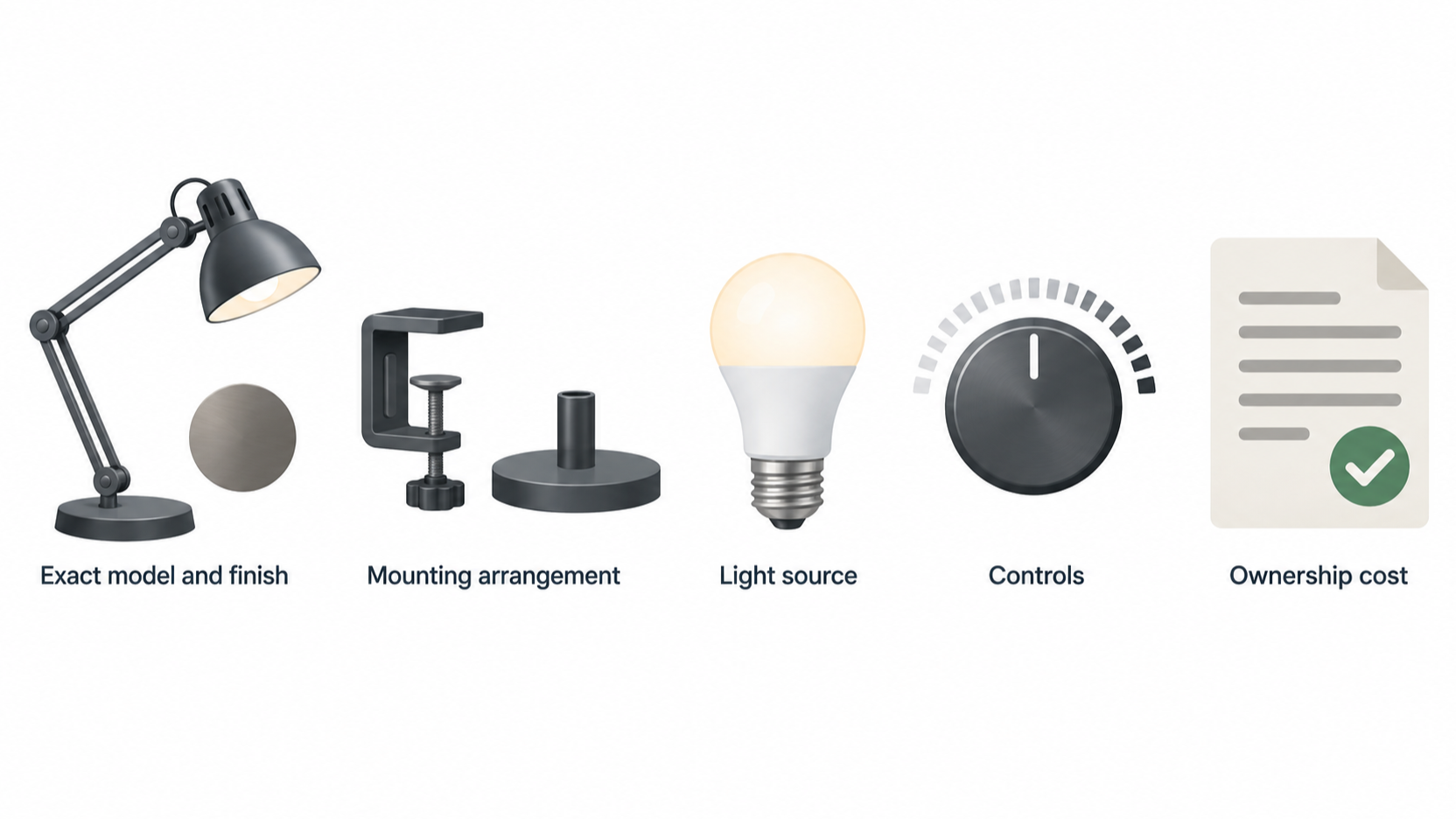
A large percentage reduction is not, by itself, evidence of a good task-lamp deal. The useful comparison is between two offers for the same delivered setup: the exact model and finish, the mounting arrangement, the light source, the controls and the costs required to put the lamp to work.
For example, an articulated desk lamp can look comparable to another adjustable lamp while arriving with a different clamp, base, bulb requirement or mounting limit. Those differences affect both fit and the final price. Start with the product documentation, then compare like with like.
What Counts as a Genuine Task-Lamp Deal
AI-generated illustration — not a retailer product photo.
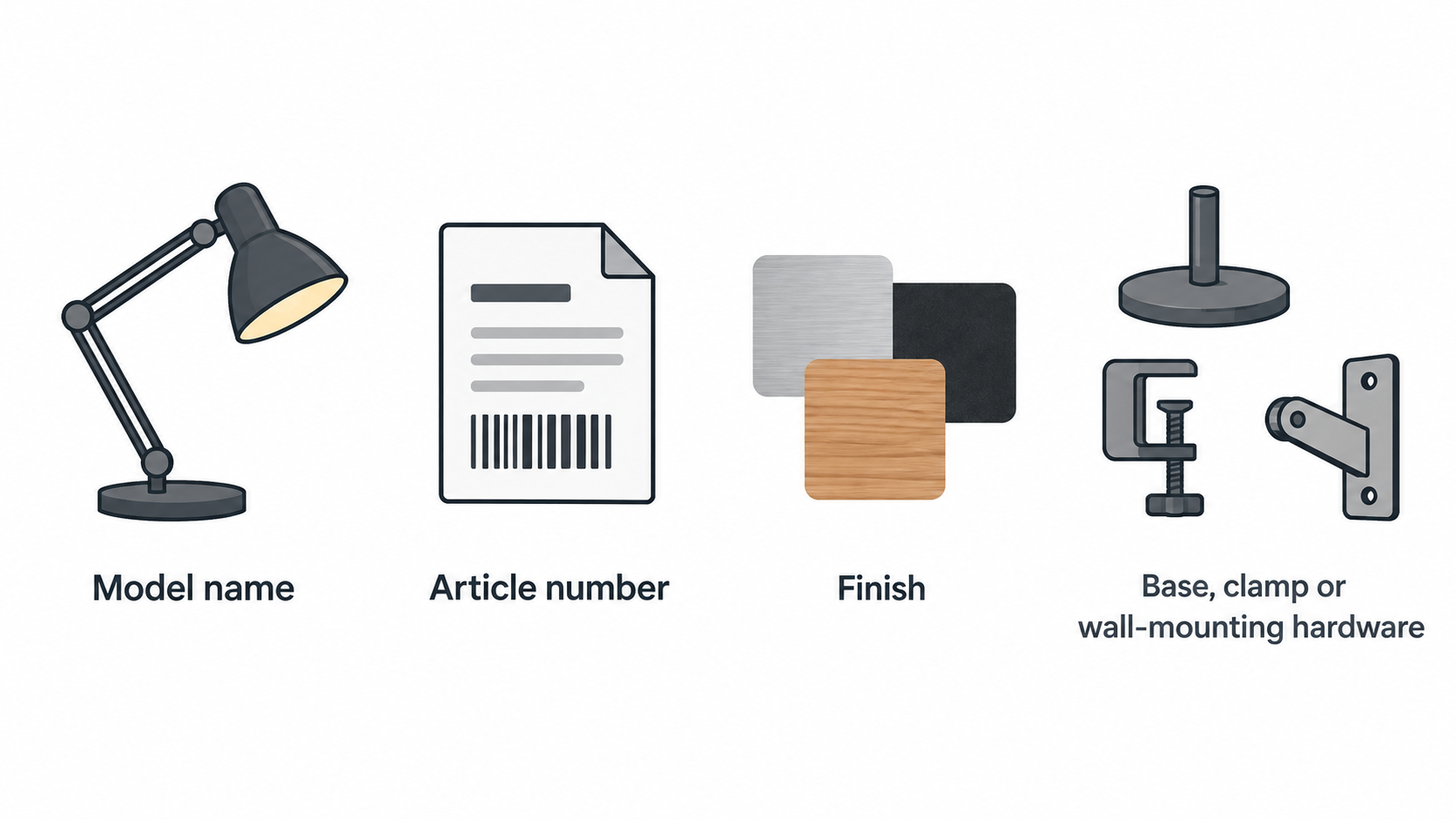
A genuine deal is an offer that gives you the required lighting setup for less overall—not simply a lamp with a lower headline price. Before comparing retailers or promotions, make sure the product identity and delivered configuration match.
Use a short comparison record for each offer:
- model name, article number and finish;
- included base, clamp or wall-mounting hardware;
- whether a bulb is included, required separately or built in;
- documented adjustment, controls and placement options;
- delivery, collection and return conditions.
This approach prevents a common false comparison: treating a lamp-only price as equivalent to a ready-to-use arrangement. IKEA’s TERTIAL listing, for instance, identifies the product as article 703.554.55, says that the bulb is sold separately and notes extra shipping or Click & Collect costs. Those facts can materially change an apparent saving.
A lower-priced offer is therefore worth pursuing only after it matches your workspace requirement and includes—or transparently prices—the remaining items needed to meet it.
Confirm the Exact Model and Mounting Kit
AI-generated illustration — not a retailer product photo.
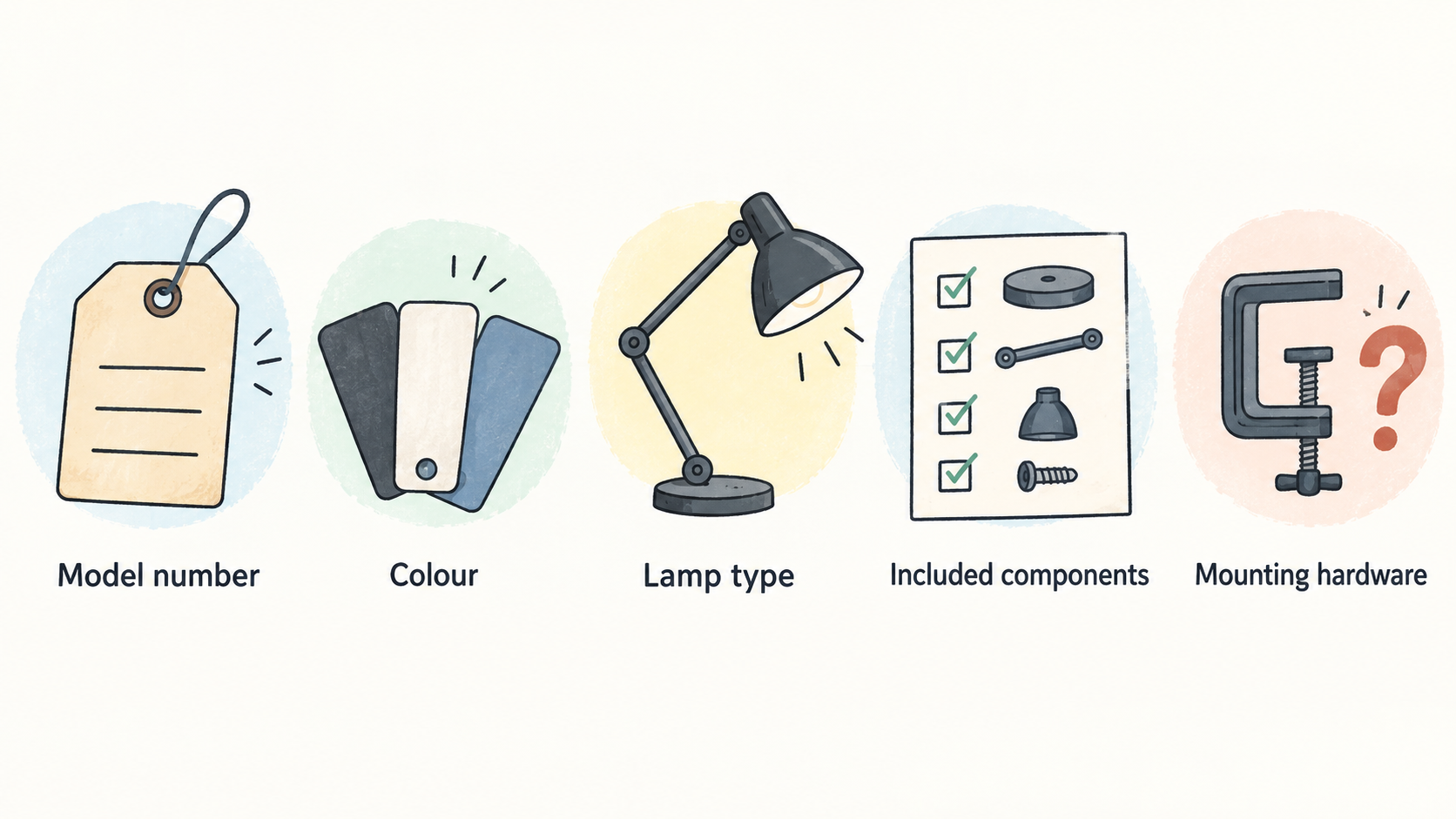
Begin with the identifier on the product page, not the product-family name in a search result. Record the model number, colour, lamp type and every component the seller says is included. If a listing is vague about the mounting hardware, treat the configuration as unconfirmed.
The IKEA TERTIAL Work lamp is a useful example of why this matters. Its official listing describes a white steel lamp with an adjustable arm and head, and names a table clamp among its components. It also gives a clamping range of up to 60 mm. That is a practical measurement to compare with the thickness and shape of your desk edge before assuming the offer will fit.
Check the advertised configuration against your intended installation:
- Desk edge: Is there a clear, accessible edge within the documented clamp range?
- Placement: Will the lamp be used as a table lamp, or is wall mounting relevant to your workspace?
- Included parts: Is a bulb, base or mounting accessory already in the basket, or does it need to be added?
- Finish and variant: Does the article number match the finish and version shown in the offer?
Do not substitute a similar-looking lamp for the exact model during price comparison. A different version can alter the mount, light-source requirement or usable placement. The best saving is on the configuration that actually works at your desk.
Match Reach and Adjustability to the Workspace
An adjustable lamp is valuable only when its documented movement helps you place light where the task needs it. Consider where the clamp or base will sit, where the head must reach and whether you need to redirect the beam between reading, screen work, drawing or bench tasks.
For TERTIAL, IKEA states that both the arm and head are adjustable and that the light can be directed where wanted. The same page describes it as suitable for use as a table lamp or mounted on a wall. Those documented options are more useful than a generic label such as “desk lamp”: they tell you to assess both reach and mounting location.
Artémide describes the Tolomeo table family as having an articulated arm system, an all-direction adjustable head and a spring mechanism for height and tilt adjustment. That makes it another example of a task-light design where adjustment should be compared as a functional feature, not assumed from photographs.
Before buying, map the lamp to the workspace. Check whether the head can be aimed at the work surface without occupying the monitor area, whether the arm can be repositioned as the task changes and whether the chosen mounting point leaves the desk usable. If the seller does not document a measurement or movement limit you need, pause and seek clarification rather than estimating from an image.
Check Light Source Controls and Documentation Gaps
The light source is part of the deal. A lamp that needs a separate bulb should be compared with the cost and specification of the compatible bulb, while an integrated-light model should be assessed from the current product documentation for its stated controls and replacement information.
IKEA’s TERTIAL page says that the light bulb is sold separately and recommends an LED E27 globe opal white bulb. Add that bulb to the comparison basket before deciding that a displayed lamp price is lower. The page also provides product material information: steel for the arm and reflector shade, with ABS plastic listed for the clamp-related components.
For every offer, look for clear documentation covering:
- the supplied light source or the required compatible bulb;
- the switch or other stated controls;
- materials and care information;
- mounting range and assembly instructions;
- replacement, return and delivery details relevant to the purchase.
Missing information is not proof that a feature is absent or unsuitable. It is a reason to hold the comparison open. BenQ’s e-Reading Desk Lamp page, for example, is region-specific and directs visitors to change region where service is unavailable; that is a reminder to verify the current local product and shop page rather than relying on a generic product reference.
Avoid filling documentation gaps with assumptions about brightness, compatibility, service life or performance. Use only the specifications the seller or manufacturer currently provides for the exact regional offer.
Calculate Total Ownership Cost Before You Buy
AI-generated generic editorial illustration — not a retailer product photo and does not depict the reviewed product or service. Make the non-headline costs readers should include in a genuine-deal calculation immediately scannable.
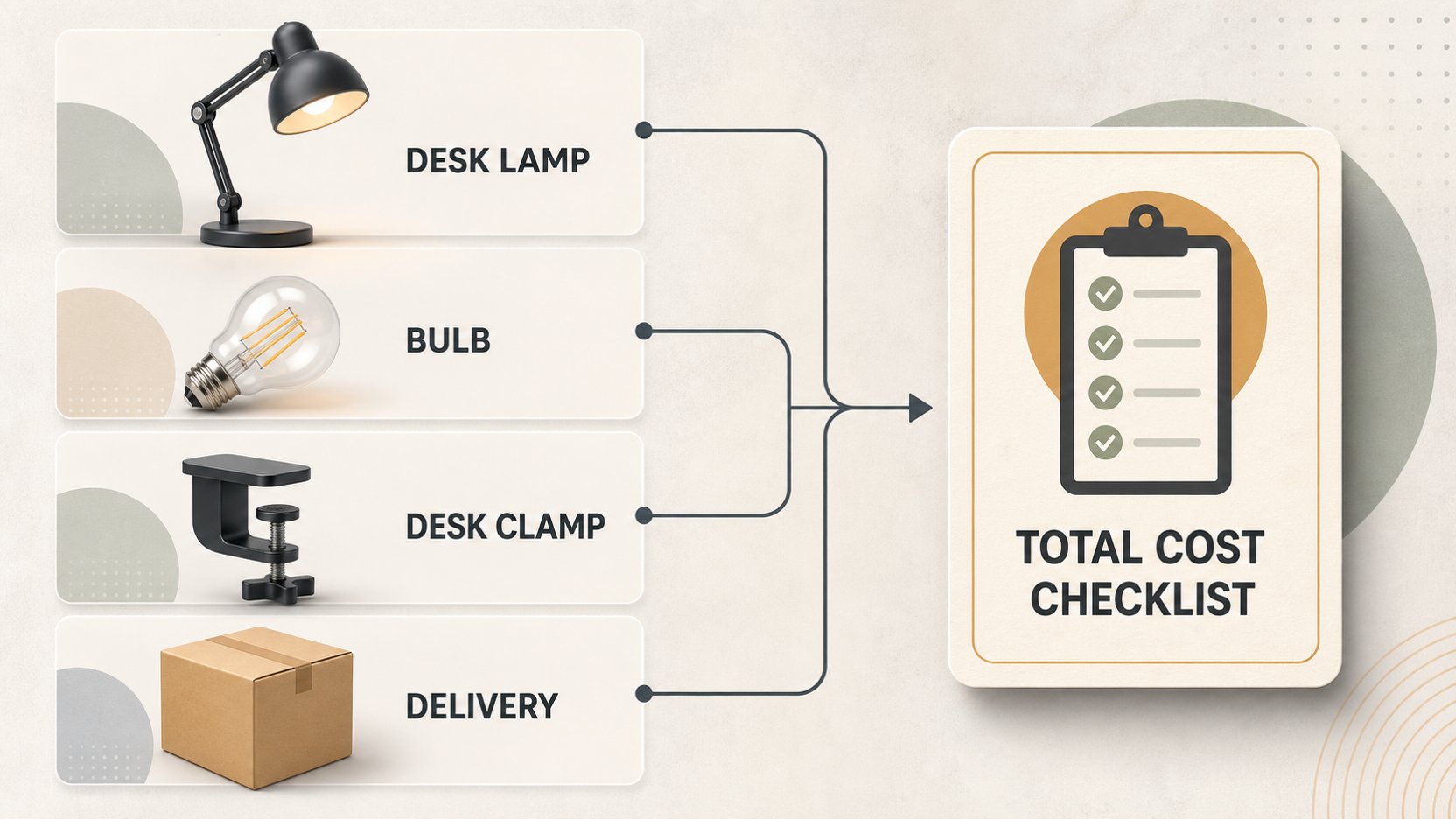 Calculate the cost of achieving the setup you need, rather than the cost of placing the lamp alone in a basket.
Total ownership cost = delivered lamp configuration + required bulb or accessory + delivery or collection charge + any other documented purchase condition that changes your outlay.
For a clamp-mounted TERTIAL setup, the lamp and a compatible E27 bulb may both be relevant. The official IKEA listing says the bulb is sold separately and that shipping or Click & Collect service costs are extra. It also states that returns are accepted within 365 days for a full refund, subject to the linked conditions. These are not reasons to recommend or reject the lamp; they are items to include in a current comparison.
Use this decision sequence:
- Confirm the exact article number and required mounting arrangement.
- Add every required bulb, accessory or compatible component.
- Check delivery or collection costs for your location.
- Read the retailer’s current return conditions before completing the order.
- Compare the final configuration cost with the other offer, not its discount badge.
A deal is stronger when no unpriced addition is required to make the lamp work for your intended task. Conversely, a cheaper headline price can be false economy if you must add a bulb, change the mounting plan or pay a service charge that the comparison omitted.
Price, stock status, delivery availability and policies change. Recheck the live seller page immediately before purchase, especially if a deal was found through a search result, price-comparison service or older promotion.
Before you buy: complete an exact-model and total-cost check for the configuration that will sit on your desk.
Frequently Asked Questions
Is a lamp cheaper if the bulb is sold separately?
Not necessarily. Add the required compatible bulb to the lamp price, then include delivery or collection charges. IKEA’s TERTIAL listing states that the bulb is sold separately and recommends an LED E27 globe opal white bulb, so the lamp-only price is not the whole setup cost.
Should I choose a clamp-mounted or base-mounted task lamp?
Choose the arrangement that fits the documented workspace constraints. For a clamp-mounted model, verify desk-edge access and the stated clamp range. IKEA lists TERTIAL with a clamp range of up to 60 mm; measure your intended mounting point before treating it as suitable.
How can I compare an integrated-light desk lamp with a replaceable-bulb model?
Compare the delivered setup rather than forcing the products into a single feature label. Check the official documentation for the supplied or compatible light source, controls, mounting, materials and replacement information. If a fact is not documented for the exact regional model, leave it unconfirmed.
What should I check on the retailer page before buying a discounted task lamp?
Verify the exact model identifier and finish, included mounting components, bulb requirement, documented adjustment and fit, delivery or collection cost, availability and current return conditions. Then compare the final basket cost with the alternative offer.
Recheck current product details, measurements, delivery terms and return conditions before ordering.
Sources
Related reading
- Best adjustable desk and task lamps for German homes and workshops: evidence-led top choices
- How to choose a desk or task lamp by reach, mounting, controls and light-source design
- Replaceable-bulb vs integrated-LED task lamps: maintenance, controls and long-term trade-offs
- When to buy a task lamp: compare the base, clamp, bulb, controls and replacement support
Editorial information: About our editorial team · Read our editorial policy · Read our affiliate disclosure.